

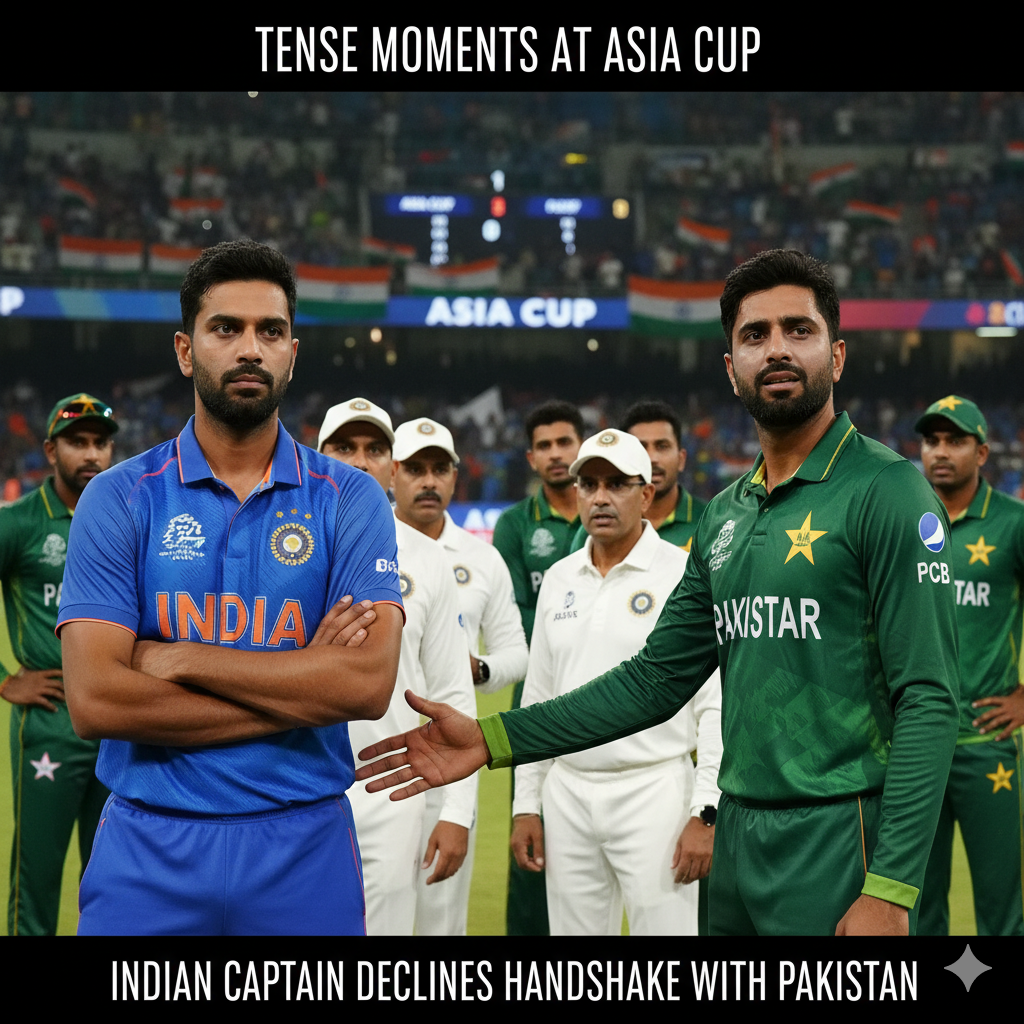
The Asia Cup is always more than just a cricket tournament—it is an emotional battlefield where rivalries extend beyond the pitch. Among all the rivalries, none carries more weight than India versus Pakistan. The matches between these two cricketing giants are watched by millions across the world, and every move is dissected not only by sports analysts but also by fans, media, and political commentators. The recent Asia Cup encounter brought not just cricketing drama but also a moment that sparked heated debates across borders: the Indian captain reportedly declined to shake hands with the Pakistani players after the match.
The Incident: A Symbolic Gesture or Misunderstanding?
The handshake in cricket is more than a courtesy—it is a symbolic gesture of respect, sportsmanship, and the spirit of the game. When the Indian captain avoided the customary handshake, it immediately caught the attention of broadcasters and audiences. Was it deliberate? Was it a simple oversight? Or was it a sign of deeper tensions?
Such incidents carry a weight far beyond the cricket pitch. Fans interpret it in different ways—some see it as a strong statement of national pride, while others criticize it as a lack of sportsmanship. In high-stakes India-Pakistan matches, even a small action can snowball into a full-fledged controversy.
Historical Context of India-Pakistan Cricket Rivalry
To understand the significance of this incident, one must revisit the history of India-Pakistan cricket. Since their first clash in 1952, matches have been charged with nationalistic fervor. Beyond cricket, political relations between the two countries often reflect in the intensity of the games. Post the 2008 Mumbai attacks, bilateral series were suspended, and the two sides have only met in ICC tournaments or Asia Cup events. This rarity makes every encounter a spectacle.
Previous Asia Cups have also witnessed tense moments—be it verbal spats, aggressive send-offs, or heated celebrations. However, the recent handshake controversy adds a new dimension to this storied rivalry.
The Spirit of Sportsmanship in Question
Cricket, often called the “Gentleman’s Game,” emphasizes values such as fairness, mutual respect, and camaraderie. The handshake at the end of a match symbolizes these values. For critics, the Indian captain’s refusal undermines this ethos, potentially setting a poor example for millions of aspiring cricketers.
On the other hand, supporters argue that given the political tensions, expecting players to act as ambassadors of friendship may be unfair. Their primary responsibility is to lead their teams and focus on the sport. Some even argue that exaggerated interpretations by the media often fuel unnecessary controversies.
Reactions from Fans and Experts
Social media erupted within minutes of the video being shared. Indian fans were divided—while some lauded the captain for standing firm, others condemned the act as unsporting. Pakistani fans, predictably, criticized the gesture, while neutral cricket lovers expressed disappointment.
Former players and commentators also weighed in. Some urged restraint, advising that such incidents should not overshadow the spirit of cricket. Others highlighted the importance of symbolic gestures in easing tensions between the two nations.
Media Amplification of Controversy
The media plays a pivotal role in shaping narratives around such incidents. Headlines like “Indian Captain Snubs Pakistan” or “Handshake Controversy Erupts at Asia Cup” amplify emotions and drive discussions beyond sports. This sensationalism fuels viewership but often escalates matters unnecessarily.
It is crucial to remember that cricketers, though celebrities, are human. They experience stress, fatigue, and emotions like any other person. A single missed handshake might be a result of exhaustion rather than intent.
The Asia Cup: A Stage of High Pressure
Asia Cup matches are high-pressure games, especially India versus Pakistan encounters. The players carry the expectations of billions. Every move is scrutinized, from their on-field performance to their body language. Under such pressure, it is natural for emotions to run high.
The captain’s decision, whether deliberate or unintentional, must be seen in the larger context of the game. After all, sports should be about healthy competition, not animosity.
Lessons for the Future
The incident provides valuable lessons for players, fans, and governing bodies:
- Sportsmanship Must Be Preserved – Players must remember their actions carry symbolic weight and can influence generations.
- Media Responsibility – Journalists and broadcasters should avoid sensationalism and provide balanced perspectives.
- Fan Awareness – Supporters should celebrate the sport and avoid letting political emotions overshadow the game.
- Diplomatic Potential – Cricket has historically played a role in easing tensions. Gestures of goodwill can pave the way for better relations.
Cricket as a Unifying Force
Despite controversies, cricket remains one of the strongest unifying forces in South Asia. Matches between India and Pakistan attract global attention not just for the cricketing quality but also for their cultural and emotional resonance. This handshake controversy, while unfortunate, also highlights the immense responsibility players carry as role models.
Conclusion
The Asia Cup 2025 handshake controversy will undoubtedly remain a talking point for months. Whether viewed as a political statement, an act of defiance, or simply an emotional slip, it underscores how deeply cricket is intertwined with the identities of India and Pakistan. While fans and media continue to debate, it is essential to remember that cricket should remain a bridge, not a barrier.
At Get Me Up Advertising, we understand the power of narratives. Just as cricket transcends boundaries and stirs emotions, advertising too can connect audiences across geographies, cultures, and languages. With our expertise in newspaper advertising across all Indian cities and languages, we help businesses and individuals amplify their voice, just like a cricket match echoes across stadiums and screens.
For impactful campaigns, obituary ads, matrimonial announcements, or public notices—reach out to us at 9810974532 or email info@getmeup.in.
Because in advertising, as in cricket, every gesture matters.